

There is something fitting about the fact that North Carolina, a state defined by one of America’s most dramatic geographic transitions — from the ancient, cloud-wrapped ridges of the Blue Ridge Mountains in the west to the flat, salt-wind barrier islands of the Outer Banks in the east — should also have developed one of the American South’s most diverse and intellectually serious specialty coffee cultures. Geography shapes character, and North Carolina’s character, formed by the tension between its mountain self and its coastal self and the long Piedmont middle that connects them, is exactly the kind of layered, unhurried, self-aware character that specialty coffee culture tends to flourish in.
The state’s relationship with third-wave coffee — the movement that treats coffee as a specialty agricultural product deserving the same attention to origin, processing, and craft that wine and fine cheese receive — developed earlier and more deeply than most people outside the state realize. The Research Triangle, the cluster of research universities and technology companies that anchors Raleigh, Durham, and Chapel Hill, provided an unusually fertile early environment. Universities produce internationally mobile graduates who encounter specialty coffee elsewhere and bring expectations home. Technology industries attract talent from cities where specialty coffee is already established. Both dynamics were operating in the Triangle by the mid-2000s, creating consumer demand for quality that the right operators would quickly move to satisfy.
Durham emerged as the undisputed center of the Triangle’s coffee evolution, and Counter Culture Coffee — founded in 1995 and now headquartered in Durham — played a foundational role that cannot be overstated. What Counter Culture contributed to North Carolina’s specialty coffee culture was not just excellent roasted coffee but a philosophy: that sourcing should be direct and transparent, that farmers should be paid fairly and specifically for quality lots, and that consumers deserve to know exactly where their coffee comes from and how it was produced. Counter Culture’s annual transparency reports — detailed documents that lay out the prices paid to individual farm partners alongside context for what those prices mean — established an accountability standard that influenced how the entire regional coffee community thought about supply chain ethics. A culture of seriousness about coffee origins was seeded in North Carolina partly because one of the country’s most respected quality roasters chose to make it home.
Asheville, three hours west in the Blue Ridge, developed its specialty coffee identity along a parallel but distinct trajectory. The mountain city had already established itself as one of the Southeast’s most interesting food and beverage destinations, with a craft brewing scene whose per-capita density attracted national attention and a food culture that consistently preferred the handcrafted, the locally rooted, and the independently owned over corporate alternatives. Specialty coffee arrived in Asheville and found a community predisposed to welcome it on exactly those terms. The roasters and café owners who built Asheville’s coffee scene understood intuitively that their city wanted honesty about what it was drinking — origin stories, processing transparency, the specific names of the farms whose beans were in the hopper. Asheville’s coffee culture carries this commitment to authenticity as deeply as it carries any other aspect of its identity.
Between these two poles, the rest of North Carolina’s specialty coffee geography has developed with a diversity that reflects the state’s character. Charlotte’s growing specialty scene mirrors the financial capital’s expanding cosmopolitan ambitions — more urban in pace, more design-conscious in aesthetic, but no less serious about cup quality in its best expressions. Wilmington and the coastal towns offer a different register again — slower, more open to the morning light, connected to the rhythms of a waterfront community where the first coffee of the day feels like a genuine occasion rather than a commuting obligation.
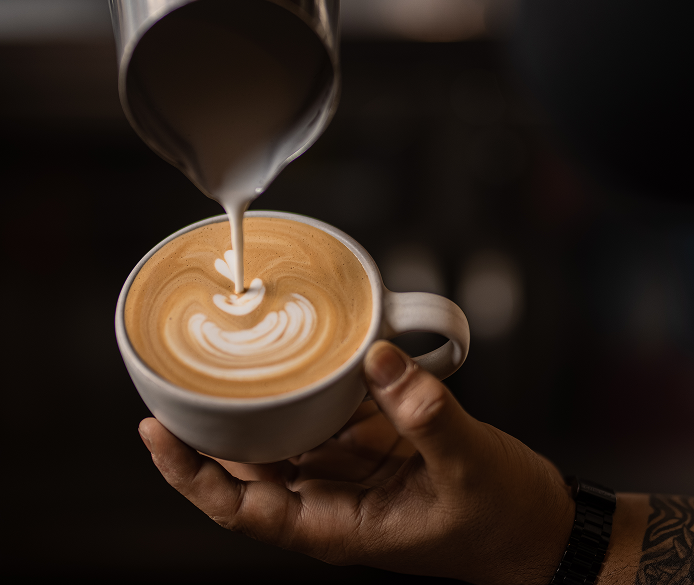
What gives North Carolina’s specialty coffee culture its particular texture is the quality of the conversation that happens around the coffee. In the best cafés across the state, there is genuine engagement between the people making the coffee and the people drinking it — conversations about origin character, seasonal menu changes, the comparison between a washed and a natural processed lot from the same farm. This conversation, multiplied across hundreds of daily interactions at dozens of quality-focused locations, constitutes something real: a coffee-literate population that knows what it wants, can articulate why, and holds its local coffee establishments to meaningful standards.
The infrastructure supporting North Carolina’s specialty coffee culture has deepened considerably over the past decade. Quality wholesale roasters — Counter Culture foremost among them — provide the green coffee access and training resources that allow newer café operations to start at a quality level that would have required years of independent development previously. The state’s food and beverage media, both traditional and digital, maintains ongoing coverage that educates consumers and creates accountability for quality claims. Barista competitions at the regional and national level have given North Carolina’s coffee professionals visibility and competitive benchmarks that sharpen the craft culture statewide.
The sourcing story behind North Carolina’s coffee is increasingly a direct one. Several of the state’s most respected roasters have developed multi-year purchasing relationships with specific farms in Ethiopia, Colombia, Kenya, and Central America — relationships that provide quality advantages, supply chain security, and the kind of farmer-specific knowledge that allows roasters to communicate origin character with genuine authority rather than generic romanticism. These relationships are transforming North Carolina from a sophisticated consumer of specialty coffee into a participant in the specialty coffee supply chain whose quality commitments and ethical sourcing practices are recognized by producers globally.
There is, finally, a sense of place that North Carolina’s specialty coffee culture has developed that goes beyond mere geography. The best coffee experiences in this state feel rooted — connected to the specific character of Asheville’s mountain morning, or Durham’s food-serious neighborhood culture, or Wilmington’s coastal light. This rootedness is not accidental. It is the result of operators who love where they live and have built their coffee businesses as genuine expressions of their communities rather than franchises of a generic specialty coffee aesthetic. From the Blue Ridge to the Outer Banks, North Carolina’s coffee culture is as varied and as worth exploring as the land it grows from.